
What is the quickest way to stop a kitchen sink from smelling? A quick fix often involves pouring boiling water down the drain, followed by a mixture of baking soda and vinegar.
A persistent, unpleasant odor emanating from your kitchen sink can be more than just an annoyance; it can signal underlying issues with your plumbing. Fathoming the source of these bad smells kitchen sink can be the first step toward a fresh-smelling kitchen. Fortunately, there are many simple and effective ways to banish these odors and maintain a healthy drain system. This comprehensive guide will walk you through various methods, from natural solutions to specific product recommendations, ensuring your kitchen stays smelling delightful.
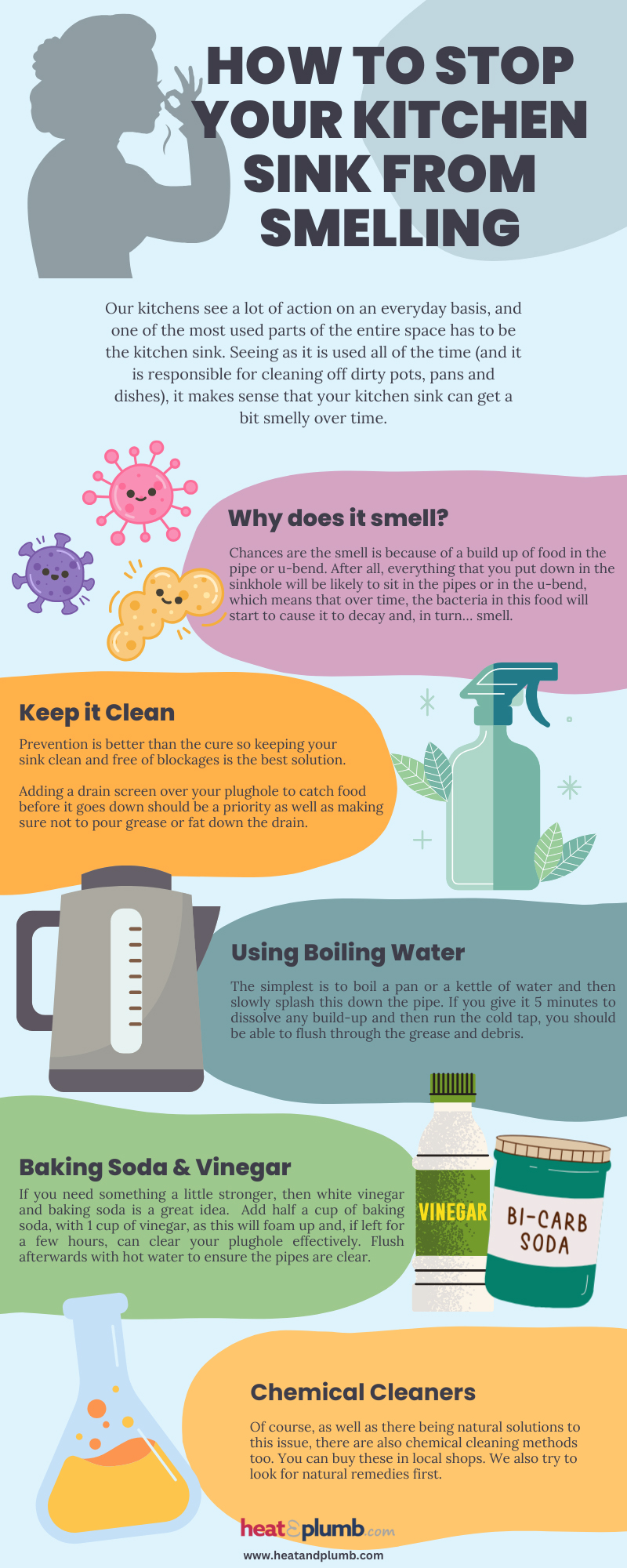
Image Source: www.heatandplumb.com
Deciphering the Root Cause of Sink Smells
Before we dive into solutions, let’s explore why kitchen sinks often develop foul odors. Grasping these common culprits is key to effective prevention and cleaning.
The Buildup of Gunk
Over time, grease, food particles, soap scum, and other debris can accumulate in your sink pipes. This sticky residue provides a breeding ground for bacteria, which break down the organic matter, releasing unpleasant gases.
Garbage Disposal Woes
If you have a garbage disposal, it’s a prime suspect. Food scraps can get lodged in the disposal chamber, rot, and create a potent smell. Even with regular use, bits of food can cling to the blades and walls.
The Sink Trap’s Role
The P-trap, the U-shaped pipe beneath your sink, is designed to hold water, creating a seal that prevents sewer gases from entering your home. If the trap dries out or becomes clogged with debris, those gases can escape, leading to sink odors.
Hair and Debris Accumulation
While more common in bathrooms, hair can also find its way into kitchen drains, especially if you’re disposing of certain types of waste. Combined with other debris, it can form a stubborn clog.
Mold and Mildew
Damp environments are perfect for mold and mildew. If your sink area is consistently wet, mold can start to grow in pipes or around the drain opening, contributing to musty smells.
Natural and Effortless Ways to Remove Bad Smells Kitchen Sink
You don’t always need harsh chemicals to tackle sink odors. Many effective solutions utilize common household items.
The Power of Baking Soda and Vinegar
This classic combination is a fantastic natural drain cleaner and deodorizer. The fizzing reaction helps to loosen grime and neutralize odors.
How to Use Baking Soda Vinegar Drain Method:
- Pour Baking Soda: Start by pouring about half a cup to a full cup of baking soda down your drain.
- Add Vinegar: Follow with an equal amount of white vinegar. You’ll hear it fizz and bubble.
- Cover the Drain: Immediately cover the drain with a stopper or a damp cloth to keep the reaction working downwards in the pipes.
- Let it Sit: Allow the mixture to work for at least 15-30 minutes, or longer for tougher smells.
- Flush with Hot Water: After the waiting period, pour a kettle of boiling water down the drain to flush away the loosened debris and vinegar residue.
Boiling Water Flush
Sometimes, a simple flush of boiling water is all that’s needed to clear out minor grease and slime.
Procedure:
- Boil Water: Fill a kettle or large pot with water and bring it to a rolling boil.
- Pour Slowly: Carefully and slowly pour the boiling water directly down the drain.
- Repeat if Necessary: For stubborn buildup, you might need to repeat this process a few times.
Caution: Avoid this method if you have PVC pipes that are old or brittle, as extreme heat could potentially damage them. If you’re unsure, lukewarm water is a safer alternative.
Lemon and Citrus Peels
The natural acidity of citrus fruits, like lemons, oranges, and grapefruits, can help cut through grease, and their pleasant scent masks odors.
Method:
- Use the Peels: Save citrus peels after juicing or eating the fruit.
- Grind Them: You can either cut them into small pieces or run them through your garbage disposal (if you have one).
- Flush: Follow with hot water.
This is a great way to maintain freshness between deeper cleanings.
Salt and Ice
This method is particularly useful for garbage disposals. The salt acts as an abrasive, and the ice helps to scrape away buildup.
Steps:
- Add Ice: Fill your garbage disposal with ice cubes.
- Add Salt: Pour about half a cup of coarse salt into the disposal.
- Run Disposal: Turn on the cold water and run the garbage disposal until the ice and salt are completely ground up.
- Flush: Turn off the disposal and flush the drain with hot water.
Specialized Products for a Cleaner Drain
While natural methods are excellent, sometimes you need something more targeted.
Using a Drain Deodorizer
Commercial drain deodorizers are formulated to break down organic matter and leave a fresh scent. They are generally safe for most plumbing systems when used as directed.
Tips for Using a Drain Deodorizer:
- Read Instructions: Always follow the product’s usage instructions carefully.
- Frequency: Some can be used weekly or monthly for maintenance.
- Avoid Overuse: Using too much can sometimes lead to buildup.
Garbage Disposal Cleaner
These products are specifically designed to clean the blades and interior of your garbage disposal, which is often a source of odors. They typically come in a foaming or liquid form that you pour into the disposal.
How to Effectively Use Garbage Disposal Cleaner:
- Turn off Power: Ensure the garbage disposal is switched off at the breaker for safety.
- Pour Cleaner: Pour the recommended amount of cleaner directly into the disposal.
- Wait: Let the cleaner sit for the time specified on the packaging.
- Run Cold Water & Disposal: Turn the power back on, run cold water, and then activate the disposal to grind away any loosened debris.
- Flush: Follow with hot water.
Sink Trap Cleaning: Essential Kitchen Drain Maintenance
The sink trap, or P-trap, is a critical component in preventing odors. Regularly checking and cleaning it can save you from many smelly situations.
How to Clean Smelly Sink Pipes (Focusing on the P-Trap)
Safety First: Before you begin, place a bucket or container directly beneath the P-trap to catch any water or debris that may spill out.
Steps:
- Locate the P-Trap: This is the U-shaped pipe directly under your sink.
- Loosen the Slip Nuts: Most P-traps are connected with slip nuts that can be loosened by hand or with a pipe wrench if they are very tight.
- Remove the Trap: Once loosened, carefully remove the P-trap. Be prepared for water to drain out.
- Clean the Trap: Take the P-trap to another sink or outside. Use a brush (an old toothbrush or a bottle brush works well) to scrub out any accumulated gunk, hair, and debris from the inside. You can use a mixture of hot water and dish soap, or a baking soda and vinegar solution, for cleaning.
- Inspect the Pipes: While the trap is off, you can also use a flashlight to look into the pipes connected to it for any visible blockages.
- Reassemble: Reattach the P-trap, ensuring the slip nuts are tightened securely but not overly so to avoid cracking the plastic.
- Test for Leaks: Run water in the sink and check the connections for any leaks.
This procedure is a vital part of proactive kitchen drain maintenance.
Preventing Sink Odor: Long-Term Strategies
Consistent habits are the best defense against recurring sink smells.
Be Mindful of What Goes Down the Drain
Certain items should never be poured or scraped down your kitchen sink, as they contribute significantly to clogs and odors.
Items to Avoid:
- Grease and Oil: These solidify in pipes, trapping food particles.
- Coffee Grounds: They don’t dissolve and can clump together.
- Eggshells: The membrane can stick to pipes, and the gritty texture can accumulate.
- Fibrous Foods: Celery, corn husks, and onion skins can easily cause clogs.
- Pasta and Rice: They expand when wet, leading to blockages.
- Food Scraps: Unless you have a very efficient garbage disposal, dispose of food scraps in the trash or compost.
Regular Cleaning Schedule
Establish a routine for cleaning your sink and drains.
Recommended Cleaning Schedule:
- Daily: Rinse the sink with hot water after use.
- Weekly: Use a baking soda and vinegar treatment or a natural drain cleaner.
- Monthly: Consider a more thorough cleaning of the sink trap.
- Quarterly: Run boiling water down the drain to help flush out minor buildup.
Utilize Your Garbage Disposal Correctly
If you have a garbage disposal, use it wisely.
Proper Garbage Disposal Use:
- Run Cold Water: Always run cold water before, during, and after using the disposal. This helps solidify any grease so it can be ground up and flushed away, rather than coating the pipes.
- Small Amounts: Feed food waste into the disposal in small batches.
- Avoid Certain Foods: As mentioned above, steer clear of problematic items like coffee grounds and eggshells.
Troubleshooting Persistent Smells
If you’ve tried several methods and the smell persists, or if you suspect a more serious issue, consider these steps.
Identifying a Clogged Drain Remedy
A recurring bad smell can sometimes indicate a slow drain or a partial clog. If water is draining slowly, it’s a sign that you need a more robust approach.
Signs of a Clogged Drain:
- Slow draining water.
- Gurgling sounds from the drain.
- Water backing up in the sink.
Remedies for a Clogged Drain:
- Plunger: A sink plunger can create suction to dislodge minor clogs. Ensure a good seal around the drain.
- Drain Snake (Auger): For tougher clogs, a drain snake can physically break up or retrieve the blockage. Feed it into the drain until you meet resistance, then crank the handle to clear the obstruction.
- Enzyme Drain Cleaners: These use natural enzymes and bacteria to break down organic waste. They are slower-acting but often considered safer for pipes than harsh chemical cleaners.
Checking Vent Pipes
Your plumbing system has vent pipes that allow air into the system, helping water flow smoothly and preventing sewer gases from being siphoned out of traps. If a vent pipe is blocked (often by leaves or nests), it can disrupt the water seal in your traps, allowing smells to enter your home. This is a less common issue but can be the culprit for persistent, difficult-to-diagnose smells. If you suspect this is the case, it’s best to contact a professional plumber.
When to Call a Professional Plumber
There are times when DIY solutions aren’t enough, and professional help is necessary.
Situations Requiring a Plumber:
- Persistent Odors: If the smell doesn’t improve after trying multiple cleaning methods.
- Recurring Clogs: If you frequently deal with clogged drains.
- Slow Draining: If multiple drains in your house are slow to drain.
- Suspected Sewer Line Issues: If you notice sewage smells or backups.
- If You’re Uncomfortable: If you’re not comfortable with any of the DIY repairs, especially sink trap cleaning, it’s always safer to call a professional.
A plumber can diagnose more complex problems like blockages deeper in the main drain lines, issues with the sewer vent system, or problems with the main sewer line itself.
Table: Common Sink Smells and Their Solutions
| Smell Type | Likely Cause | Easy Fixes | Prevention |
|---|---|---|---|
| Rotten Egg | Bacteria breaking down food waste; sulfur compounds | Boil water flush; Baking soda & vinegar; Pour bleach (diluted, use sparingly) followed by water; Garbage disposal cleaner. | Avoid grease and food scraps in drain; Use garbage disposal correctly; Regular baking soda & vinegar treatments. |
| Musty/Moldy | Mold and mildew growth in damp areas | Scrub drain opening and sink trap with a bleach solution or vinegar; Ensure good ventilation; Use a drain deodorizer with mold-inhibiting properties. | Wipe up spills promptly; Keep sink area dry; Regularly clean sink trap; Use a drain deodorizer. |
| Sewage Odor | Dry or clogged P-trap; problem with vent pipe | Ensure P-trap is full of water (run water if needed); Sink trap cleaning; Check for any obvious obstructions. If persistent, call a plumber. | Avoid letting sink dry out; Regular P-trap inspection and cleaning. |
| Chemical Smell | Residue from harsh cleaners | Flush thoroughly with plenty of water; Run a baking soda and vinegar mixture. | Use natural cleaners where possible; Rinse thoroughly after using any cleaner. |
Frequently Asked Questions (FAQ)
Q1: Can I pour bleach down my kitchen sink to get rid of smells?
A: Yes, but cautiously. Diluted bleach can kill bacteria and neutralize odors. Pour about 1/4 cup of bleach followed by hot water. However, avoid mixing bleach with other cleaners, especially ammonia or vinegar, as this can create toxic fumes. Frequent use of bleach can also degrade pipes over time, so it’s best reserved for stubborn odors and used sparingly.
Q2: How often should I clean my kitchen sink drain?
A: For general maintenance and to prevent odors, a baking soda and vinegar treatment or a hot water flush weekly is a good practice. Cleaning the sink trap every few months or if you notice slow draining is also recommended.
Q3: My garbage disposal smells. What can I do?
A: Garbage disposals are common odor culprits. Try grinding citrus peels (lemon, orange, grapefruit) with cold water. You can also use a specialized garbage disposal cleaner or the baking soda and vinegar method, followed by running the disposal with cold water.
Q4: Is it safe to use chemical drain cleaners for smells?
A: Chemical drain cleaners can be effective for clogs and sometimes odors, but they are often harsh. They can damage pipes, especially older ones, and release strong fumes. It’s generally safer to try natural methods or enzyme-based cleaners first. If you must use a chemical cleaner, follow the instructions precisely and ensure good ventilation.
Q5: Why does my sink smell like rotten eggs?
A: The “rotten egg” smell is usually due to sulfur compounds produced by bacteria that feed on food particles and grease in your drain pipes or garbage disposal. Regular cleaning with baking soda and vinegar, along with avoiding grease down the drain, can help eliminate this odor.
Conclusion
A clean-smelling kitchen sink is achievable with a little regular attention and the right techniques. By understanding the causes of common sink odors and implementing these easy fixes and preventative measures, you can keep your kitchen smelling fresh and your plumbing in good working order. Whether you prefer natural solutions like baking soda vinegar drain treatments or targeted products like a drain deodorizer or garbage disposal cleaner, there’s a method for everyone. Remember that consistent kitchen drain maintenance, including sink trap cleaning, is your best defense against the unpleasant surprise of a smelly sink.