
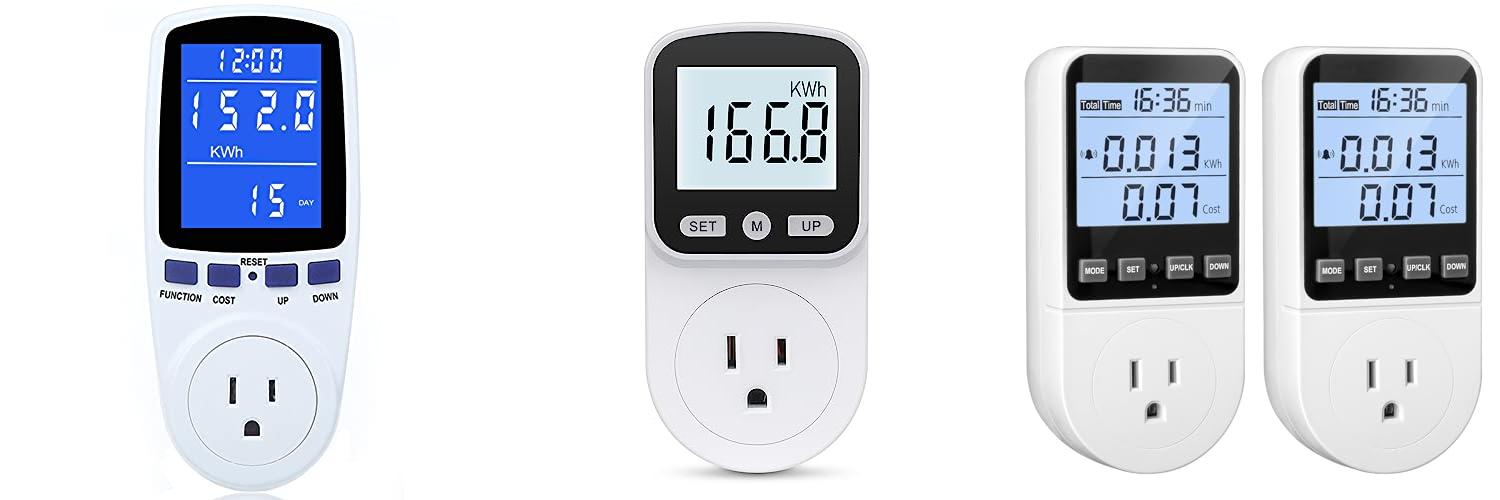
Ever wonder how much energy your gadgets are actually using? It’s like trying to guess how much candy is in a jar – you can take a wild guess, but you won’t know for sure without a closer look. That’s where a power meter steps in, acting as your personal energy detective.
In today’s world, we use so many electronic devices, from our phones to our refrigerators. Knowing how much electricity they gobble up is super important. It can help you save money on your electric bill and even help the planet by using less energy. But when you start looking for a power meter, it can feel a bit overwhelming. There are so many types, and figuring out which one is best for you can be confusing and a little frustrating.
That’s why we’ve put together this guide. We’re going to break down what power meters are and what you need to know to pick the perfect one. You’ll learn how to choose a power meter that fits your needs without all the head-scratching. By the end of this post, you’ll feel confident in your choice and ready to start tracking your energy usage like a pro.
Our Top 5 Power Meter Recommendations at a Glance
Top 5 Power Meter Detailed Reviews
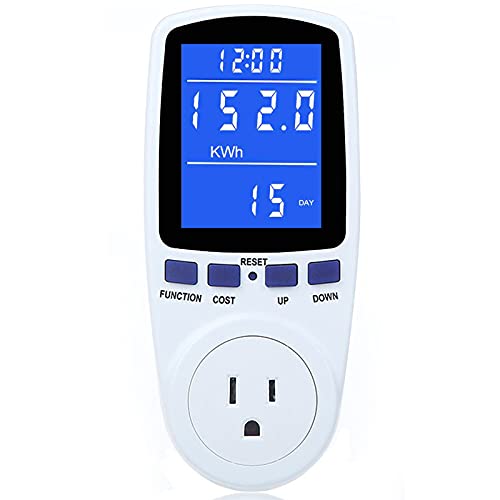
1. Upgraded Watt Power Meter Plug Home Electrical Usage Monitor Consumption
Rating: 8.8/10
Take control of your home’s electricity usage with this Upgraded Watt Power Meter Plug. This smart device lets you easily monitor how much power your appliances use, helping you save money on your electricity bills.
What We Like:
- It shows you lots of important information: power (W), energy (kWh), volts, amps, hertz, power factor, and cost.
- You can switch between 7 different display modes to see all the details.
- The large, clear LCD screen with a backlight makes it easy to read the numbers, even in the dark.
- The screen has wide viewing angles, so you can read it from anywhere.
- You can adjust how long the backlight stays on, from 10 minutes to always on.
- It has overload protection to warn you if an appliance uses too much power.
- The data memory function saves your readings even if you unplug the meter or there’s a power outage.
What Could Be Improved:
- The default overload setting might need to be adjusted for some appliances.
This power meter is a fantastic tool for understanding and managing your home’s energy consumption. It’s a simple way to become more energy efficient and save money.
2. Upgraded Watt Meter Power Meter Plug Home Energy Monitor Electricity Usage Monitor

Rating: 8.8/10
Take control of your electricity bills with the Upgraded Watt Meter Power Meter Plug. This handy device helps you understand exactly how much power your appliances are using, so you can save money and energy. It’s designed for easy use right in your home.
What We Like:
- Monitors everything: It shows you power (W), electricity used (kWh), voltage (V), frequency (Hz), current (A), power factor (PF), unit price ($/kWh), and total cost ($).
- Eight display modes make it simple to see all the important numbers.
- Tracks total cost, so you know how much your appliance is costing you over time.
- Overload protection warns you if an appliance is using too much power (over 1800W) by flashing “OVERLOAD” to keep you safe.
- Built tough with high-quality, fireproof, and anti-drop ABS material.
- The bright white backlight makes the screen easy to read, day or night. It turns off automatically after 10 minutes of no button presses.
- Easy to reset: Just press the “M” button for 5 seconds to clear all data and settings.
- Data memory saves your usage and cost information even if you unplug the meter or the appliance.
What Could Be Improved:
- The overload protection is set at 1800W, which might not be adjustable for all needs.
- The backlight turns off automatically, which is good for saving power, but you need to press a button to see it again.
This power meter is a fantastic tool for anyone wanting to monitor their home’s energy use and cut down on electricity costs. It’s simple to use and packed with helpful features.
3. 2 Pack Upgraded Watt Meter

Rating: 8.6/10
This 2-pack of upgraded watt meters is designed to help you understand and manage your home’s electricity usage. These power meter plugs let you monitor everything from the power a device uses to how much it costs to run it. With a clear, backlit display and helpful overload protection, they make tracking your energy consumption simple and safe.
What We Like:
- Tracks many different power details: wattage, energy used (kWh), voltage, amps, frequency, power factor, cost, and even minimum/maximum power.
- Eight different display modes make it easy to see all the information you need.
- The meter calculates and shows how much electricity your appliances use and how much it costs over time.
- Built with strong, heat-resistant PC material for durability.
- Includes overload protection that warns you if an appliance uses too much power, preventing damage.
- Features a kWh alarm to alert you when a set amount of electricity has been used.
- Saves your data, even if you unplug it or there’s a power outage.
- Backlit display makes it easy to read day or night.
- Adjustable backlight time settings let you customize how long the screen stays lit.
What Could Be Improved:
- The default overload power setting might need to be adjusted before first use for some appliances.
- The backlight turns off automatically after a set time unless you manually keep it on.
This watt meter pack is a smart investment for anyone looking to save money on electricity bills and understand their energy habits better. It provides valuable insights and safety features for all your appliances.
4. HBN Watt Meter Plug with Backlight

Rating: 8.7/10
Take control of your electricity bills with the HBN Watt Meter Plug! This handy device plugs directly into your wall socket and lets you see exactly how much power your appliances are using. It’s a simple way to understand your energy consumption and find ways to save money.
What We Like:
- The bright, backlit LCD screen makes it easy to read your electricity usage, even in the dark. You can see the numbers clearly from almost any angle.
- It shows you nine different types of information, like how much power (W), voltage (V), and current (A) your devices are using. You can also track how long you’ve used them and how much it’s costing you.
- This meter helps you save money by showing you which appliances use the most energy. You can then make smart choices to reduce your electricity bills.
- Don’t worry about losing data! The meter remembers everything, even if the power goes out.
- It’s safe to use with most household appliances.
- The interface is clean and simple, making it very easy to use.
What Could Be Improved:
- The backlight turns off after 15 seconds to save energy, which might be a little short for some users who want to keep it lit.
This HBN Watt Meter Plug is a fantastic tool for anyone wanting to understand and reduce their electricity usage. It’s user-friendly and provides valuable insights to help you save money.
5. SURAIELEC Watt Meter
Rating: 8.6/10
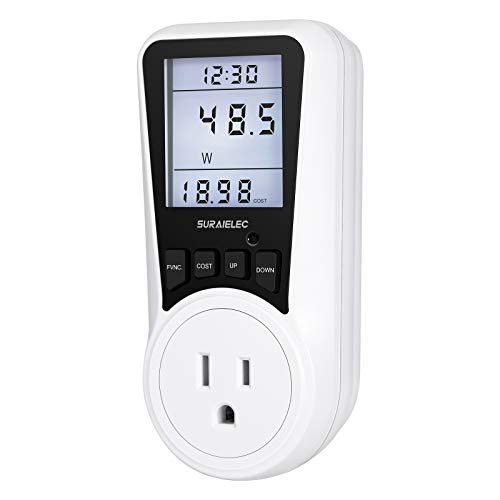
Take control of your electricity bill with the SURAIELEC Watt Meter. This handy device plugs directly into your outlet and shows you exactly how much power your appliances are using. You can even set your own electricity rates to see how much money you’re spending in real-time. It’s perfect for finding those energy-guzzling gadgets that are costing you extra. Plus, its clear, backlit screen makes it easy to read numbers, even in dim lighting.
What We Like:
- It automatically figures out your electricity costs, helping you save money.
- The big, lit-up screen is super easy to see.
- It remembers your energy use for 90 days, even if the power goes out.
- Safety features like overload protection keep your appliances safe.
- It doesn’t take up too much space and leaves other outlets free.
- It’s very accurate, so you get precise readings.
What Could Be Improved:
- The display might be a bit small for some users.
- It only works with 110-130V outlets, so it’s not for every home.
This SURAIELEC Watt Meter is a smart way to understand and reduce your energy use. It’s a valuable tool for anyone looking to save money and be more energy-conscious.
Choosing the Right Power Meter: Your Complete Guide
A power meter helps you understand how much electricity your devices use. This guide will help you pick the best one for your needs.
1. Key Features to Look For
Display and Readability
- A clear, easy-to-read screen is important.
- Look for a display that shows power (watts), voltage (volts), and current (amps) clearly.
- Some meters also show energy used over time (kilowatt-hours). This helps you track your electricity bill.
Accuracy
- Accuracy tells you how close the meter’s readings are to the real amount of power used.
- Most power meters are accurate enough for home use.
- For very precise needs, look for meters with higher accuracy ratings.
Data Logging and Connectivity
- Some advanced meters can save your power usage data.
- This data can be useful for long-term tracking or when you want to see patterns.
- Some meters connect to your phone or computer, allowing you to view data remotely.
Safety Features
- Overload protection is a crucial safety feature. It stops the meter from getting damaged if too much power is drawn.
- Look for meters that are certified by safety organizations.
2. Important Materials
Casing
- Most power meters have a plastic casing.
- Durable plastic protects the internal parts.
- Look for tough, impact-resistant plastic.
Internal Components
- High-quality electronic components ensure accurate readings and a longer lifespan.
- Better components mean the meter is less likely to break or give wrong numbers.
3. Factors That Improve or Reduce Quality
Brand Reputation
- Well-known brands often use better materials and have stricter quality control.
- This usually means a more reliable and accurate product.
Build Quality
- A well-built meter feels solid and has no loose parts.
- Gaps or flimsy construction can mean lower quality.
Certifications
- Look for certifications like UL or CE.
- These show that the meter has been tested and meets safety standards.
Price
- Sometimes, a higher price means better quality.
- However, you can still find good, affordable power meters.
- Don’t just go for the cheapest option.
4. User Experience and Use Cases
Ease of Use
- A good power meter is simple to plug in and understand.
- The buttons should be easy to press, and the display should be clear.
- If you’re new to power meters, choose one with a simple interface.
Portability
- Some power meters are small and light.
- This makes them easy to move from one outlet to another.
- If you need to check many devices, a portable meter is best.
Common Use Cases
- Saving Money: Identify energy-hogging appliances to reduce your electricity bill.
- Troubleshooting: Figure out why an appliance uses too much power or why a circuit breaker trips.
- Understanding Energy Consumption: Learn how much power different devices use when they are on or in standby mode.
- DIY Projects: Measure the power used by electronics you build or modify.
- Environmental Awareness: Track your home’s energy use to reduce your carbon footprint.
By considering these points, you can find a power meter that fits your needs and budget.
Frequently Asked Questions (FAQ)
Q: What is a power meter used for?
A: A power meter measures how much electricity a device uses. You can use it to save money on your electric bill by finding out which appliances use the most power.
Q: How accurate are home power meters?
A: Most home power meters are accurate enough for everyday use. They will give you a good idea of how much power your devices are using.
Q: Do I need a special outlet for a power meter?
A: No, most power meters plug directly into a standard wall outlet. Then, you plug your appliance into the power meter.
Q: Can a power meter tell me how much my electricity bill will be?
A: Yes, if the meter shows the total energy used in kilowatt-hours (kWh). You can then multiply that number by your electricity company’s price per kWh.
Q: Are power meters safe to use?
A: Yes, when used correctly and if they have safety features like overload protection. Always check for safety certifications.
Q: What does “wattage” mean on a power meter?
A: Wattage (watts) is the amount of power an appliance uses at any given moment. Higher wattage means it uses more power.
Q: What is “voltage” and “amperage”?
A: Voltage (volts) is the electrical pressure. Amperage (amps) is the flow of electricity. Power is calculated by multiplying voltage and amperage.
Q: Can I use a power meter outdoors?
A: Most power meters are designed for indoor use only. Using them outside could be dangerous and damage the meter.
Q: What is the difference between a basic and an advanced power meter?
A: Basic meters show current power usage. Advanced meters might log data over time, connect to apps, or track multiple types of power measurements.
Q: How long do power meters typically last?
A: A good quality power meter can last for many years with normal use. They are generally quite durable.
In conclusion, every product has unique features and benefits. We hope this review helps you decide if it meets your needs. An informed choice ensures the best experience.
If you have any questions or feedback, please share them in the comments. Your input helps everyone. Thank you for reading.