
Did you know that a single strand of spaghetti can support over 100 pounds of weight? Or that a hummingbird’s wings beat so fast, they’re almost invisible? These incredible facts are just a tiny glimpse into the amazing world of science that captivates young minds. But when it comes to finding books that spark that same curiosity, the sheer volume of options can feel overwhelming. Parents and educators often grapple with knowing which books will truly engage, educate, and inspire the next generation of scientists.
Choosing the right science books for kids isn’t just about picking up any book with a cool cover. It’s about finding resources that explain complex ideas in simple, exciting ways. We want books that don’t just present facts, but encourage critical thinking and a lifelong love of discovery. That’s why we’ve put together this guide. By the end of this post, you’ll have a clearer understanding of what makes a great science book for this age group and discover some fantastic titles that are sure to ignite a passion for learning.
Our Top 5 Science Books For Kids Recommendations at a Glance
Top 5 Science Books For Kids Detailed Reviews
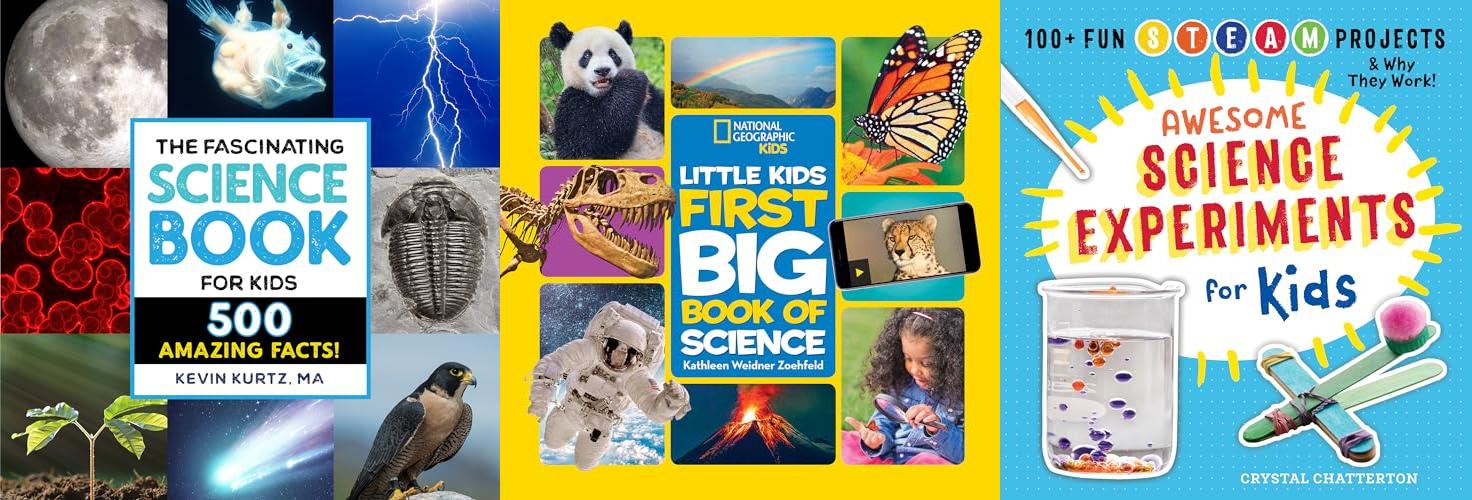
1. The Fascinating Science Book for Kids: 500 Amazing Facts! (Fascinating Facts)

Rating: 9.1/10
Unleash your child’s curiosity with “The Fascinating Science Book for Kids: 500 Amazing Facts!” This engaging book is packed with incredible facts that will spark a love for science in young minds. From the depths of the ocean to the vastness of space, children will discover wonders they never imagined. Each page offers a new adventure, making learning an exciting and fun experience. It’s the perfect way to supplement classroom learning or simply explore the world around us.
What We Like:
- 500 incredible science facts that cover a wide range of topics.
- Bright and engaging illustrations that capture children’s attention.
- Facts are presented in a clear and easy-to-understand language, perfect for 6th-7th graders.
- Encourages independent learning and exploration of scientific concepts.
- Provides hours of educational entertainment for curious kids.
What Could Be Improved:
- Some facts might be too advanced for younger readers within the target age range.
- A glossary of terms could be helpful for understanding more complex scientific vocabulary.
- The book could benefit from interactive elements like quizzes or simple experiments to further engage readers.
This book is a fantastic resource for any child who loves asking “why?” It’s an excellent tool to foster a lifelong interest in science and discovery.
2. National Geographic Little Kids First Big Book of Science (National Geographic Little Kids First Big Books)

Rating: 8.8/10
The National Geographic Little Kids First Big Book of Science is a vibrant and engaging introduction to the wonders of the world for young explorers. This book sparks curiosity and encourages a love for learning about science, covering a wide range of fascinating topics.
What We Like:
- Stunning, full-color photographs captivate young readers.
- Clear, simple language makes complex scientific concepts easy to understand.
- Covers a broad spectrum of scientific subjects, from animals and plants to space and weather.
- Encourages hands-on learning with suggested activities.
- Durable binding holds up to repeated use by enthusiastic little hands.
What Could Be Improved:
- Some topics might be slightly too advanced for the youngest end of the target age range.
- More interactive elements like flaps or pop-ups could enhance engagement further.
This book is an invaluable resource for parents and educators looking to nurture a child’s scientific mind. It’s a fantastic way to make learning fun and accessible for preschoolers and early elementary students.
3. Awesome Science Experiments for Kids: 100+ Fun STEM / STEAM Projects and Why They Work (Awesome STEAM Activities for Kids)

Rating: 9.3/10
Unleash your child’s inner scientist with “Awesome Science Experiments for Kids: 100+ Fun STEM / STEAM Projects and Why They Work.” This vibrant guide is packed with over a hundred exciting activities that make learning about science, technology, engineering, art, and math a blast. Each experiment not only engages young minds but also explains the science behind the magic, fostering a deeper understanding and curiosity. It’s designed to be accessible and enjoyable for kids, turning any home into a dynamic learning lab.
What We Like:
- Vast collection of over 100 engaging STEM/STEAM projects.
- Clear explanations of the scientific principles behind each experiment.
- Encourages hands-on learning and critical thinking skills.
- Promotes creativity and problem-solving through STEAM integration.
- Suitable for a wide range of ages within the target demographic.
What Could Be Improved:
- Some experiments might require common household items that need to be gathered beforehand.
- The “why they work” explanations could be simplified further for younger children within the 6th-7th grade range.
This book truly ignites a passion for discovery. It provides endless opportunities for fun and educational exploration, making it an invaluable resource for parents and educators alike.
4. The Mysteries of the Universe: Discover the best-kept secrets of space (DK Children’s Anthologies)

Rating: 8.8/10
Embark on an epic journey through the cosmos with “The Mysteries of the Universe: Discover the best-kept secrets of space” from DK Children’s Anthologies. This captivating book unlocks the wonders of space for young explorers. It makes complex ideas about stars, planets, and galaxies easy to understand. Children will learn about the vastness of space and the incredible phenomena that exist beyond our world. It’s a portal to adventure and knowledge.
What We Like:
- Vivid and engaging illustrations that bring space to life.
- Clear and accessible explanations of complex astronomical concepts.
- A wide range of topics covered, from black holes to nebulae.
- Inspires curiosity and a love for science and exploration.
- Durable binding ensures it can withstand many readings.
What Could Be Improved:
- Some advanced concepts might require parental guidance for younger readers.
- The “N/A” for specific features indicates a lack of detailed specifications, making it harder to assess certain aspects like paper quality or interactive elements without seeing the book.
This anthology is an excellent resource for any child fascinated by space. It sparks imagination and provides a solid foundation for understanding the universe.
5. Human Anatomy for Kids: A Junior Scientist’s Guide to How We Move

Rating: 9.1/10
Unlock the mysteries of the human body with “Human Anatomy for Kids: A Junior Scientist’s Guide to How We Move, Breathe, and Grow.” This engaging book transforms complex biological processes into exciting discoveries for young learners. It’s designed to spark curiosity and provide a solid foundation in understanding what makes us tick, from the muscles that power our every move to the lungs that fill with air and the incredible journey of growth.
What We Like:
- Bright, clear illustrations make learning about the body fun and memorable.
- The explanations are easy for 6th and 7th graders to understand.
- It covers essential systems like the skeletal, muscular, and respiratory systems.
- The book encourages hands-on activities and critical thinking.
- It fosters a genuine interest in science and health.
What Could Be Improved:
- More in-depth information on less common bodily functions could be added.
- A glossary of terms would be helpful for quick reference.
- Some advanced concepts might require adult guidance.
This guide is an excellent resource for any young explorer eager to learn about their own amazing bodies. It makes science accessible and exciting, setting the stage for a lifelong love of learning.
The Ultimate Buying Guide: Igniting Young Minds with Science Books
Choosing the right science books for kids can spark a lifelong love of learning. These books transform complex topics into exciting adventures. They help children understand the world around them. This guide will help you find the perfect science books for your budding scientist.
Key Features to Look For
When selecting science books, several features stand out.
- Age Appropriateness: The most crucial feature is that the book matches the child’s age and reading level. Books for preschoolers should have bright pictures and simple words. Older kids can handle more detailed explanations and complex vocabulary.
- Engaging Content: Look for books that make science fun! This means captivating stories, relatable examples, and interesting facts. Interactive elements like flaps, pop-ups, or scratch-and-reveal pages can significantly boost engagement.
- Clear Explanations: Science concepts should be explained simply and clearly. Avoid jargon or overly technical language unless it’s explained well. Analogies and metaphors can be very helpful.
- Stunning Illustrations and Photos: Visuals are vital for understanding. High-quality photographs and vibrant illustrations can bring scientific subjects to life. They help children visualize concepts they might not otherwise grasp.
- Accuracy: Scientific information must be correct and up-to-date. Reputable publishers and authors are a good indicator of accuracy.
- Hands-On Activities: Books that include simple, safe experiments or activities encourage active learning. These allow children to apply what they read and make discoveries themselves.
Important Materials
The physical materials of a science book also matter.
- Paper Quality: Sturdy paper prevents pages from tearing easily, especially with younger children. Thicker paper also makes illustrations and photos look better.
- Binding: A strong binding ensures the book lasts. Hardcovers are generally more durable than softcovers, making them ideal for frequent use.
- Ink and Print: Clear, easy-to-read print is essential. The ink should not smudge or fade easily.
Factors That Improve or Reduce Quality
Many factors contribute to a book’s overall quality.
- Author Expertise: Authors who are scientists, educators, or experienced science writers often produce higher-quality books. Their knowledge shines through.
- Publisher Reputation: Well-known educational publishers often have rigorous review processes. This helps ensure accuracy and quality.
- Reviewer Feedback: Reading reviews from other parents and educators can provide valuable insights into a book’s strengths and weaknesses.
- Overly Simplistic Explanations: While simplicity is good, oversimplification can sometimes lead to inaccuracies or a lack of depth.
- Poorly Designed Layout: Cluttered pages or confusing layouts can make a book difficult to follow and less enjoyable.
User Experience and Use Cases
Science books offer a rich user experience.
- Home Learning: They are perfect for parents who want to supplement school learning or explore topics of interest at home.
- Classroom Resources: Teachers use these books to introduce new concepts, provide supplemental reading, or inspire classroom projects.
- Gift Giving: Science books make thoughtful and educational gifts for birthdays and holidays.
- Independent Exploration: Children can use these books to explore their curiosity independently, fostering self-directed learning.
- Family Reading Time: Reading science books together can be a fun and educational family activity.
Frequently Asked Questions About Science Books for Kids
Q: What are the main benefits of science books for kids?
A: Science books spark curiosity, explain complex ideas, encourage critical thinking, and can inspire future careers in STEM fields. They make learning fun and engaging.
Q: How do I choose a science book for a 5-year-old?
A: For a 5-year-old, look for books with large, colorful pictures, simple vocabulary, and interactive elements like lift-the-flaps. Topics like animals, weather, and basic plants are often popular.
Q: Are science books with experiments better?
A: Yes, books with simple, safe experiments are excellent. They allow children to learn by doing, which reinforces concepts and makes learning memorable.
Q: What age group do “general science” books typically cover?
A: “General science” books can vary widely. Some are for early elementary (ages 5-8), while others are for middle grades (ages 9-12). Always check the recommended age on the book or its description.
Q: How important are illustrations in science books for kids?
A: Illustrations and photos are very important. They help children visualize scientific concepts, making them easier to understand and more interesting.
Q: Can science books help kids with schoolwork?
A: Absolutely. Science books can reinforce what kids learn in school, provide additional explanations, and introduce them to new scientific topics.
Q: What if a book’s science information is outdated?
A: Outdated information can be misleading. It’s good to choose books from reputable publishers and check publication dates, especially for rapidly changing fields like technology or space exploration.
Q: Are there science books for very young toddlers (under 3)?
A: Yes, for toddlers, look for board books with very simple concepts like colors, shapes, or animal sounds, often with large, clear images. These introduce basic scientific observation.
Q: How can I tell if a science book is well-written?
A: A well-written science book uses clear language, explains terms when introduced, and presents information in a logical and engaging way. The author’s passion for the subject often comes through.
Q: Where can I find good science books for kids?
A: You can find excellent science books at your local library, bookstores, online retailers, and educational supply stores. Reading online reviews can also help guide your choices.
In conclusion, every product has unique features and benefits. We hope this review helps you decide if it meets your needs. An informed choice ensures the best experience.
If you have any questions or feedback, please share them in the comments. Your input helps everyone. Thank you for reading.